






Why Samarkand? Inside FIDE's Choice for the 46th Chess Olympiad
FIDE awarded the 2026 Olympiad to Uzbekistan in August 2022 — while the Uzbek team was actively winning gold at that very Olympiad. The story of how a chess backwater became a hosting power in four years.
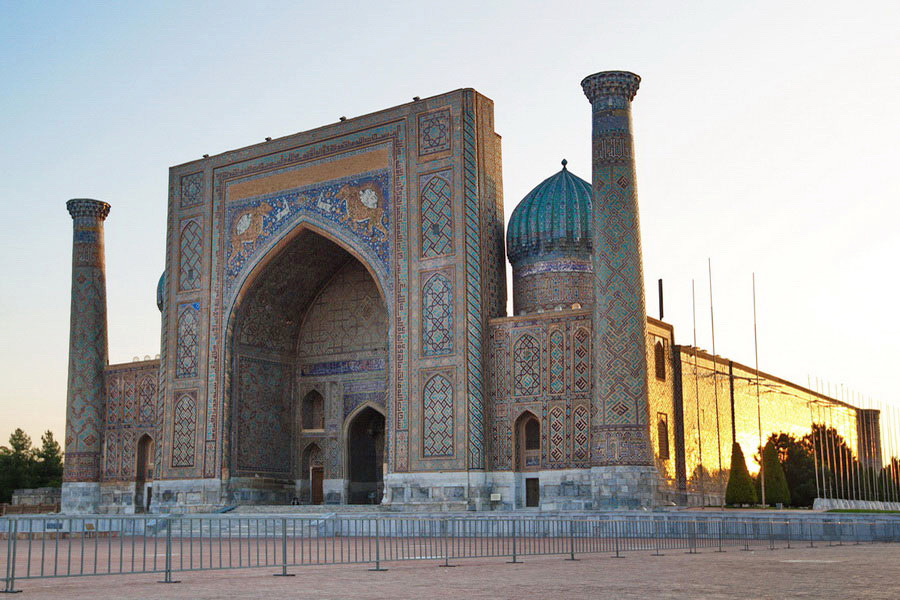
Why Samarkand? Inside FIDE's Choice for the 46th Chess Olympiad
On 15 September 2026, more than two hundred national teams will gather in a city most chess players have never visited — and many cannot point to on a map. They will play eleven rounds of Swiss-system chess across two sections, watched by a global audience, on boards arranged inside a hall built specifically for events of this scale. The city is Samarkand. The country is Uzbekistan. And the decision to bring the Chess Olympiad here was neither obvious nor accidental.
This is the story of how that choice was made, why it makes sense, and what it tells us about where chess is heading.
Table of contents
- The headline facts
- How FIDE awarded Samarkand
- Uzbekistan's case: why FIDE said yes
- Why Samarkand, not Tashkent
- The generation that made it possible
- Asia's chess decade
- What's at stake beyond the medals
- Frequently asked questions
- Sources and further reading
The headline facts
Before we get to the why, the what needs to be on the table. The 46th Chess Olympiad runs from 15 to 28 September 2026 in Samarkand, Uzbekistan, played at the Silk Road International Exhibition Center. Both the Open and Women's sections are contested over eleven rounds using the Swiss system, with teams of four players plus one reserve.
The previous edition, Budapest 2024, set a record with 197 teams in the Open and 183 in the Women's competition. Samarkand 2026 is expected to surpass both numbers, with FIDE projecting around 200 federations in total. Three additional events run alongside the main competition: the 3rd FIDE Chess Olympiad for People with Disabilities (10–18 September), the FIDE Congress with presidential elections, and the General Assembly vote that will award the 2030 Chess Olympiad.
The key facts at a glance:
- Dates: 15–28 September 2026
- Opening Ceremony: 15 September
- First round: 16 September
- Venue: Silk Road International Exhibition Center, Samarkand
- Format: 11 rounds, Swiss system, teams of 4 + 1 reserve
- Sections: Open and Women
- Expected federations: around 200
- Side events: Disabilities Olympiad, FIDE Congress, FIDE Elections, 2030 host vote
Two trophies are at stake at the top of the standings: the Hamilton-Russell Cup (Open) and the Vera Menchik Cup (Women), with the Nona Gaprindashvili Trophy awarded for the best combined federation performance across both sections.
That is the skeleton. The flesh on it — the answer to why all of this is happening in Samarkand specifically — has several layers.
How FIDE awarded Samarkand
The decision is older than most chess fans realise. It was made on 8 August 2022, during the FIDE General Assembly held alongside the 44th Chess Olympiad in Chennai, India. By the rules of the Olympiad bidding procedure, FIDE selects a host four years before the event, giving the winning federation enough runway to build infrastructure, secure financing, and absorb the operational scale of one of chess's largest gatherings.
Uzbekistan's bid was approved at that Chennai assembly, ahead of any rival proposal that reached final consideration. The Uzbek federation initially indicated that the host city would be either Tashkent or Samarkand — the final selection of Samarkand was confirmed later, once the venue and the political-organisational backing had been settled. By early 2024, the answer was unambiguous: Samarkand, in the Silk Road International Exhibition Center.
The reaction inside the chess world was telling. Emil Sutovsky, FIDE's CEO, captured the mood publicly on social media within hours of the vote: Uzbekistan is approved as the host of FIDE Olympiad-2026. Knowing the hospitality of Uzbeks, I am sure it will be an exceptional event. What made the moment unusual was the timing: Uzbekistan was awarded the 2026 Olympiad while its team was actively winning gold at the 2022 Olympiad. The country was simultaneously becoming a chess power and being entrusted with chess's largest event.
Under FIDE's regulations, the Olympiad organiser commits to substantial financial obligations. These include a one-million-euro lump sum payable no later than 18 months before the event (covering FIDE's contribution and broadcasting rights), plus a minimum of 1.5 million euros for travel reimbursements to federations entitled to support, and 50,000 euros for inspection costs. The bidder must back these commitments with a guarantee from a top-100 international bank or, exceptionally, a sovereign government guarantee. Hosting an Olympiad is not a vanity project. It is a budget item that runs into the tens of millions when venue costs, security, accommodation, and operations are added.
Uzbekistan accepted those terms in 2022 and has been delivering on them ever since.
Uzbekistan's case: why FIDE said yes
Three independent arguments converged in Uzbekistan's favour. None of them alone would have been sufficient. Together, they made the bid difficult to refuse.
Sporting credibility
The first argument is the one any sceptic asks first: what has this country actually done in chess?
The answer, as of 2026, is uncomfortably long for anyone who still pictures Uzbekistan as a chess backwater. At the 44th Olympiad in Chennai, the Uzbek Open team — average age around 20 — won gold on tiebreaks, ahead of Armenia and India 2, with a score of 19 match points from 11 rounds (8 wins, 3 draws, 0 losses). On board one, Nodirbek Abdusattorov scored 8.5 out of 11 with a tournament performance rating of 2803, defeating Fabiano Caruana and Gukesh D in the most consequential matches of the event. The team's victory was the youngest ever in the modern history of the Olympiad.
That was not a one-off. Abdusattorov had already become the youngest World Rapid Champion in history in December 2021, defeating Magnus Carlsen along the way and beating Ian Nepomniachtchi in the tiebreak. By April 2026, he was ranked world number 5 with a FIDE rating of 2771, fresh from victories at the Tata Steel Masters 2026 and the Prague International Chess Festival 2026.
The bench is just as remarkable. Javokhir Sindarov won the FIDE World Cup 2025, qualifying for the Candidates Tournament 2026 and emerging from it as the challenger in the upcoming World Chess Championship Match against Gukesh D, scheduled provisionally for November–December 2026. Nodirbek Yakubboev has won super-tournaments and is a fixture in elite events. Shamsiddin Vakhidov and Jakhongir Vakhidov complete a deep roster of grandmasters mostly born after 2000 — a generation that has, by every reasonable metric, made Uzbekistan a top-five chess nation.
A country whose top player is ranked number five in the world, whose other top player is playing for the World Championship two months after the Olympiad, and whose national team holds the most recent men's gold — that country has earned the right to host. The sporting case writes itself.
Track record as organiser
Sporting strength alone does not run an Olympiad. FIDE has been burned in the past by host cities that could not deliver the operational scale required for a tournament of two hundred federations. So the second pillar of Uzbekistan's case was demonstrated capacity.
That capacity was tested twice in three years, both times in Samarkand, both times successfully:
- The FIDE World Rapid and Blitz Championships 2023 (26–30 December 2023) — most of the chess elite, including Magnus Carlsen, Fabiano Caruana, Levon Aronian, and the Uzbek team, played at the Silk Road Samarkand complex. Carlsen won both the Rapid (5th title) and the Blitz (7th title) in a "double-double" performance. The event ran without major operational issues.
- The FIDE Grand Swiss 2025 (4–15 September 2025) — 116 players in the Open, 56 in the Women's, total prize fund $855,000. Anish Giri won the Open; Vaishali Rameshbabu won the Women's. Both winners qualified for the Candidates 2026. The opening ceremony at the Silk Road EXPO blended Uzbek cultural performance with chess history.
These events were not coincidental. Uzbek officials and FIDE both treated the 2023 World Rapid and Blitz, and later the 2025 Grand Swiss, as deliberate dress rehearsals for the 2026 Olympiad. As Uzbekistan's chess federation president Adkham Sadullaev put it during the Grand Swiss opening: Samarkand has been made into a global chess arena. We hosted the 2023 World Rapid and Blitz. Next year we are hosting the Chess Olympiad, and it will be a huge event for the world.
By March 2026, FIDE's inspection delegation — led by FIDE President Arkady Dvorkovich and Managing Director Dana Reizniece-Ozola — had visited Uzbekistan to review final preparations, examined venues, communications systems, accommodation and transport. Their assessment was positive. The infrastructure that delivered Rapid 2023 and Grand Swiss 2025 is the same infrastructure that will host the Olympiad. There is no improvisation involved.
A strategic pivot toward Asia
The third argument is the one FIDE rarely articulates but which any reading of recent decisions makes obvious: chess's centre of gravity is shifting east.
Until the 2010s, the Olympiad calendar was dominated by Europe (Tromsø 2014, Baku 2016, Batumi 2018, Budapest 2024) with periodic excursions to traditional chess geographies. Then came Chennai 2022 — India hosting for the first time, and India producing a world champion (Gukesh, 2024) within two years. Now Samarkand 2026, in Central Asia for the first time. And the next two cycles, by formal FIDE Council decision in April 2026, will rotate further: the priority right to host the 2032 Olympiad goes to Africa, and 2034 to the Americas. This is no longer a Eurocentric event by default.
For FIDE, awarding Samarkand 2026 was both a recognition of Uzbekistan's substantive case and a signal of where the federation wants chess to grow. Central Asia has youth, government backing, and a chess generation that wins. Combined with India's emergence on the world championship stage — Gukesh as champion, Sindarov as challenger, both 20 years old at the time of their match — the Asian decade in elite chess is not a forecast. It is happening now.
Why Samarkand, not Tashkent
Tashkent, Uzbekistan's capital, has the larger population, the older chess tradition, and the deeper bench of grandmasters and coaches. The Tashkent chess school produced Georgy Agzamov in the Soviet era and trains the country's current generation today. So why is the Olympiad in Samarkand instead?
The answer combines three considerations.
First, infrastructure built for exactly this purpose. The Silk Road Samarkand complex — opened in the early 2020s as part of a large-scale tourism investment by the Uzbek government — was designed to host major international events. It includes eight world-class hotels, an international congress center, the Silk Road EXPO Hall, and the broader Silk Road International Exhibition Center where the Olympiad will be played. This is purpose-built capacity that simply does not exist in Tashkent at the same scale and concentration.
Second, symbolism that carries. Samarkand is one of the oldest continuously inhabited cities in the world. It has been a UNESCO World Heritage Site since 2001, recognised as "Crossroads of Cultures." The Registan, Bibi-Khanym Mosque, Gur-e-Amir mausoleum, and Shah-i-Zinda necropolis form one of the most photographed urban landscapes in Central Asia. For an event that brings together two hundred federations, the visual and cultural backdrop matters. Samarkand on a tournament poster says something Tashkent does not.
Third — and this is the one most chess players will find genuinely interesting — Samarkand has a documented connection to early chess history. In 1977, archaeologists excavating the Afrasiab hill (the ancient site of Samarkand before it was destroyed by Genghis Khan in 1220) discovered ivory chess pieces dated to between the 6th and early 8th century AD. These are among the earliest known chess pieces in the world. FIDE President Arkady Dvorkovich explicitly cited this find when announcing the World Rapid and Blitz 2023 venue: Samarkand was a pivotal city along the historical Silk Road trade route and also holds historical significance for chess: it was in this city where the earliest known chess pieces were discovered in 1977.
A note of caution is appropriate here. The discovery establishes that chess (or its predecessor shatranj) was present in the region in the early medieval period. It does not establish — and historians do not generally claim — that Samarkand was a primary node in the transmission of chess from India and Persia to Europe. The dominant route ran through the Sasanian Persian and later Islamic worlds, with Baghdad as the great medieval centre of theoretical play. Samarkand was part of that broader civilisation, not its singular hub. The Afrasiab pieces matter; the legend that Samarkand was where chess "was born" or "passed through on the way to Europe" is poetic licence, not history. The truth — that chess was here a thousand years before any modern Olympiad — is impressive enough on its own.
That truth is what Chess on the Silk Road refers to. Not myth. Documented presence.
The generation that made it possible
A host bid is a federation's argument; a host country becomes credible because of its players. Uzbekistan's case rests on a generation of grandmasters whose collective achievement is, even in 2026, still being absorbed by the wider chess world.
Nodirbek Abdusattorov (b. 18 September 2004, Tashkent) is the headline name. World Rapid Champion at 17. Olympic gold medallist at 17. Tata Steel Masters winner at 21. World number 5 by April 2026. His playing style — patient, technically deep, willing to play long endgames — has drawn comparisons to Karpov, though Abdusattorov himself plays sharper opening lines than the comparison suggests.
Javokhir Sindarov (b. 2005, Tashkent) became a grandmaster at 12 — at the time, the youngest in history, before later being overtaken. His 2025 was extraordinary: winning the FIDE World Cup, qualifying for the Candidates Tournament, then winning that too. He will play Gukesh D for the World Championship in late 2026, two months after the Olympiad concludes in his home country. The match will be the youngest world championship in chess history; both players will be 20.
Nodirbek Yakubboev (b. 2002) is the technician of the team — fewer headline tournament wins than Abdusattorov or Sindarov, but a higher-percentage Olympiad performer, with a board-three gold medal at Chennai 2022.
Jakhongir Vakhidov (b. 1995) is the senior figure, the player whose final-round win against the Netherlands in Chennai 2022 secured Uzbekistan's gold. He is the bridge between the older generation and the prodigies.
The infrastructure behind these names is not improvised. President Shavkat Mirziyoyev awarded Abdusattorov a Tashkent apartment after his 2021 World Rapid title and a car after the Chennai 2022 gold — symbolic gestures that pointed to substantive state backing. Coaches were brought in, including the Bosnian-Dutch grandmaster Ivan Sokolov, who coached the Uzbek federation to gold at Chennai 2022 and returned for Samarkand 2026 after a break during the Budapest 2024 cycle, when former World Champion Vladimir Kramnik captained the team to bronze. Domestic tournaments multiplied. By the early 2020s, Uzbekistan was producing top-50 grandmasters at a rate disproportionate to its population.
The Chennai 2022 Olympiad was the moment the wider chess world noticed. That tournament — like every Olympiad from London 1927 onward — is documented in detail in the Great Book of Chess Olympiads series, which remains the most comprehensive English-language chronicle of the event's history. Chennai 2022 sits in that record as the breakthrough edition for Uzbek chess; Samarkand 2026 will sit in the next volume as the moment the Uzbek federation hosted the event it had recently learned to win.
Asia's chess decade
Samarkand 2026 is not an isolated decision. It is one entry in a longer pattern.
The Olympiad's history with Asia is shorter than its history with Europe. Manila 1992 was the first held in Southeast Asia. Khanty-Mansiysk 2010 was geographically Asian (though politically Russian) and brought the event to the eastern reaches of the Russian Federation. Chennai 2022 was the first in South Asia. Samarkand 2026 is the first in Central Asia. The line on the map — Manila, Khanty-Mansiysk, Chennai, Samarkand — describes a deliberate spread, not a coincidence.
The same pattern repeats outside the Olympiad. The 2024 World Championship (Singapore) was held in Asia. The 2026 World Championship will likely be held in Asia. Tata Steel India became a fixture on the elite tour. The Uzchess Cup grew into a strong annual super-tournament. The chess infrastructure of the continent — federations, sponsors, broadcast operations, coaching pipelines — has become serious.
For chess fans outside Asia, this changes the experience of the calendar. The big events are often inconvenient time zones away. Streaming has filled some of that gap; in-person attendance has become more of a commitment. Samarkand is, for most European chess fans, a longer flight than they have had to take to watch an Olympiad in person before. For Asian fans — including the rapidly growing chess audiences in India, China, Vietnam, the Philippines, and the Central Asian republics — Samarkand is suddenly, finally, close.
The FIDE Council's April 2026 decisions formalised the next stages of this rotation: priority for Africa in 2032 and the Americas in 2034. The bidding for the 2030 Olympiad will be decided by vote at the General Assembly in Samarkand itself. Whoever wins, the era when an Olympiad was assumed to be European has ended.
What's at stake beyond the medals
The two trophies and the individual board medals are the formal stakes. The informal ones are larger.
The world championship preview. In November–December 2026, two months after the Olympiad, Gukesh D will defend his world title against Javokhir Sindarov. Both will be 20 years old. Sindarov will play in Samarkand on Uzbekistan's first board (or possibly second, depending on team management around match preparation). Whatever he plays in Samarkand will be analysed obsessively by Gukesh's team. Whatever Gukesh plays will be analysed by Sindarov's. The Olympiad is a public training camp for the championship.
The FIDE elections. Held alongside the Olympiad's General Assembly, the 2026 FIDE elections will determine the federation's leadership through 2030. Incumbent Arkady Dvorkovich has indicated his intention to run; opposition figures have been mentioned in the chess press. The outcome shapes everything from anti-cheating policy to the commercial direction of the World Championship cycle. For chess politics, Samarkand 2026 is the most consequential gathering of the cycle.
The 2030 host decision. Whoever bids for 2030 — and bids close 15 June 2026 — will have their fate decided by the General Assembly in Samarkand. The hosts in the room get a privileged platform.
Teams to watch. The United States (Caruana, Nakamura, Aronian, So, Robson) come in as one of the strongest rosters in Olympiad history. India fields two teams of staggering depth — Gukesh, Praggnanandhaa, Erigaisi, Vidit, Harikrishna in the open section, plus a women's team that has medalled consistently. China is rebuilding around Wei Yi and Yu Yangyi. Uzbekistan as hosts and defending champions face the burden of expectation. Norway will be Carlsen-led; whether Carlsen plays Olympic chess in 2026 remains, as always, partly an open question. Poland brings strong open-section contenders — Duda, Wojtaszek, Bartel — and a women's team that has been a quiet steady presence in the medal conversation.
For most of these teams, Samarkand 2026 is the most important event of their two-year cycle. For Uzbekistan, it is the most important chess event in the country's history.
Frequently asked questions
Why is the 46th Chess Olympiad held in Samarkand?
The 46th Chess Olympiad is held in Samarkand because FIDE awarded the 2026 hosting rights to Uzbekistan at the General Assembly during the 2022 Olympiad in Chennai. Samarkand was selected over Tashkent for its purpose-built infrastructure (the Silk Road International Exhibition Center), its UNESCO World Heritage status as a Silk Road city, and its documented chess-historical connection through the 1977 Afrasiab archaeological discoveries.
When did FIDE choose Uzbekistan as the host?
The decision was made on 8 August 2022 at the FIDE General Assembly held in Chennai, India, during the 44th Chess Olympiad. Under FIDE rules, Olympiad hosts are selected four years in advance to allow for adequate preparation time.
When and where exactly is the 46th Olympiad held?
The 46th Chess Olympiad runs from 15 to 28 September 2026 at the Silk Road International Exhibition Center in Samarkand, Uzbekistan. The Opening Ceremony is on 15 September; the first round is played on 16 September.
Who won the previous Chess Olympiad?
India won the Open section at the 45th Chess Olympiad in Budapest 2024. China won the Women's section. Uzbekistan, the defending Open champion from Chennai 2022, won bronze in Budapest — with the same five-player line-up as Chennai but a new captain, former World Champion Vladimir Kramnik. Abdusattorov took individual silver on board 1, and Shamsiddin Vokhidov took individual gold on board 4.
How many teams will participate?
Roughly 200 federations are expected to register, surpassing the Budapest 2024 record of 197 in the Open and 183 in the Women's section. The exact final numbers will be confirmed by FIDE after the registration period (which opened on 20 April 2026).
What is the format?
Both the Open and Women's tournaments are 11-round Swiss-system competitions. Each federation enters a team of four players plus one reserve. Pairings are determined by team match points; tiebreaks use individual game points and Sonneborn-Berger-style criteria.
Is this the first Chess Olympiad held in Central Asia?
Yes. The 46th Chess Olympiad is the first to be held in Central Asia. Previous Asian hosts include Manila 1992 (Philippines), Khanty-Mansiysk 2010 (Russian Federation, geographically northern Asia), and Chennai 2022 (India). Samarkand 2026 extends this geographic spread further west into the post-Soviet Central Asian republics.
What is the FIDE Olympiad 2030 bidding?
FIDE has opened the bidding process for the 2030 Chess Olympiad, with formal applications due by 15 June 2026. The host city will be chosen by vote at the FIDE General Assembly held during the Samarkand Olympiad in September 2026. By a Council decision in April 2026, priority for the 2032 Olympiad goes to Africa and 2034 to the Americas.
Will there be a World Championship match in Samarkand?
No, but the connection is direct. Two months after the Olympiad concludes, Gukesh D (India) will defend his World Chess Championship title against Javokhir Sindarov (Uzbekistan), the Candidates 2026 winner. Both will be 20 years old at the start of the match — the youngest in chess history. The match itself will be held at a separate, yet-to-be-announced venue, scheduled provisionally between 23 November and 17 December 2026.
How is Uzbekistan preparing?
Uzbekistan has used recent FIDE events as deliberate stepping stones: the World Rapid and Blitz Championships 2023 and the FIDE Grand Swiss 2025, both held in Samarkand at the same complex that will host the Olympiad. By early 2026, FIDE's inspection delegation had reviewed the venues, accommodation, transport, and communication infrastructure, and approved the state of preparations. The Uzbek government, the Ministry of Sports, and the Uzbekistan Chess Federation are jointly managing the operation.
Sources and further reading
This article draws on:
- FIDE Council decisions, April 2026 (CM1-2026 list of decisions, fide.com)
- FIDE Invitation: 46th Chess Olympiad, 3rd FIDE Chess Olympiad for People with Disabilities & FIDE Congress 2026 (fide.com, April 2026)
- FIDE Chess Olympiad 2026 Regulations for the Main Competition (handbook.fide.com)
- FIDE Chess Olympiad 2026 official site (chessolympiad2026.fide.com)
- FIDE World Rapid and Blitz Championships 2023 official communications
- FIDE delegation visit to Uzbekistan, March 2026 (fide.com)
- ChessBase coverage of the FIDE Grand Swiss 2025 opening ceremony, Samarkand
- Public statements by FIDE President Arkady Dvorkovich, FIDE Managing Director Dana Reizniece-Ozola, FIDE CEO Emil Sutovsky, and President of Uzbekistan Shavkat Mirziyoyev
For readers interested in the deeper history of the Chess Olympiad - every edition from London 1927 to Budapest 2024 — the Great Book of Chess Olympiads series by Krzysztof Puszczewicz remains the most comprehensive English-language chronicle of the event.
Chess on the Silk Road begins on 15 September 2026. We will be covering it from the first round to the closing ceremony.