






Viswanathan Anand – The 15th World Champion
Profiles of world champions from the perspective of the Chess Olympiads
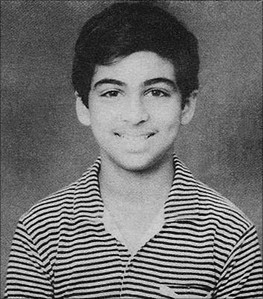
A rare photo of Anand from his youth
Viswanathan Anand at the Chess Olympiad
The world first had the chance to see this brilliant Indian play in 1984, during the 26th Chess Olympiad in Thessaloniki (Greece).
In the first round, in the Uganda – India match, a slight, barely fifteen-year-old teenager appeared on the fourth board of the Indian team, naturally holding no FIDE title yet, and his rating was a mere 2345 ELO points.
His first opponent was Enoch Barumba (ELO 2200). The game was hard-fought, and after five hours of play Anand triumphed in an endgame with the advantage of the exchange. In the third round he lost to the strong Dutch grandmaster Van der Wiel (ELO 2535*), and in the fifth, after a tough battle, he was again defeated by an International Master from Spain (IM Ochoa de Echaguen, ELO 2430). These were Anand’s only losses in Thessaloniki. The Indian team manager then gave him a day off from play. The rest did the young Anand good – he won both of his games in the next two rounds!

Viswanathan Anand – 1984
Ultimately, with a score of 7.5 points from 11 games, he achieved the eighth-best result on the fourth board. Viswanathan Anand played in every Olympiad from 1984 to 1992. Then came a break, and it was not until 2004 in Calvia (Spain) that he appeared again with the Indian team. He was already the team leader with an impressive rating of 2781 ELO points and naturally played on the first board. He achieved an excellent result of 8 points from 11 games without a single loss. Anand’s final Olympic appearance was at the 37th Chess Olympiad in Dresden. His rating was a staggering 2803 ELO points. His play, however, was poor: seven draws, a win against the weak Mongolian chess player Batchuuluun (ELO 2303), and a loss to Canadian grandmaster Charbonneau (ELO 2510). He was disappointed with his performance and stopped representing his country at Chess Olympiads, offering rather evasive explanations for his absence. Initially he claimed that his team was too weak and he had to play against low-rated opponents, losing too many ELO points. When the Indians improved and had many strong grandmasters at their disposal, Anand gave other reasons, but nobody believed him anymore…
* In the 1980s, having a rating between 2500 and 2550 meant being a strong grandmaster. Chess players rated above 2550 ELO were already among the world’s elite. The chess elite had ratings above 2600 ELO. For example, in Thessaloniki 1984, 521 players competed, of whom only 9 had a rating above 2600 ELO – and virtually the entire world’s top players were there!
King’s Indian Defense [E94]
26th Chess Olympiad, Thessaloniki 1984
Barumba (Uganda) 2200 – Anand (India) 2345
1.d4 Sf6 2.c4 g6 3.Sc3 Gg7 4.Sf3 0–0 5.e4 d6 6.Ge2 Sbd7 7.0–0 e5 8.de5 de5 9.b3 He7 10.Hc2 c6 11.Gb2 We8 12.Wad1 Sf8 13.h3 Sh5 14.Sh2 Sf4 15.Gc1 S4e6 16.Ge3 Sd4 17.Hc1 Sfe6 18.Gg4 Hb4 19.Ge6 Ge6 20.Gd4 ed4 21.Se2 Wad8 22.Wd3 Gc8 23.f3 f5 24.Hg5 He7 25.He7 We7 26.Wfd1 fe4 27.fe4 We4 28.Sg3 We7 29.Sf3 c5 30.Kh2 Wde8 31.Kg1 b6 32.Kf2 Gb7 33.W1d2 Gh6 34.We2 Ge3 35.Kf1 h5 36.Sh1 Wf8 37.Sf2 Wef7 38.Wde3 de3 39.We3 Gf3 40.gf3 Wf3 41.Wf3 Wf3 and White resigned.
Sicilian Defense [B42]
26th Chess Olympiad, Thessaloniki 1984
GM Van der Wiel (Netherlands) 2535 – Anand (India) 2345
1.e4 c5 2.Sf3 e6 3.d4 cd4 4.Sd4 a6 5.Gd3 Sc6 6.Sc6 bc6 7.0–0 g6 8.e5 Gg7 9.f4 d6 10.Sd2 de5 11.fe5 Ge5 12.Sc4 Gd4 13.Kh1 Se7 14.Gh6 f5 15.He1 Sd5 16.Wd1 Gf6 17.g4 He7 18.gf5 gf5 19.Hg3 Hc7 20.Hh3 Gb7 21.Hh5 Kd8 22.Gf5 ef5 23.Hf5 Ge7 24.Se5 Hc8 25.Hf7 Hh3 26.Gg5 Kc8 27.Wf3 and Black resigned.
Sicilian Defense [B33]
26th Chess Olympiad, Thessaloniki 1984
Anand (India) 2345 – Hergott (Canada) 2240
1.e4 c5 2.Sf3 Sc6 3.d4 cd4 4.Sd4 e5 5.Sb5 Sf6 6.S1c3 d6 7.Gg5 a6 8.Sa3 b5 9.Sd5 Ha5 10.Gd2 Hd8 11.Sf6 Hf6 12.c4 Hg6 13.f3 Ge7 14.cb5 Sd4 15.Ge3 0–0 16.Gd4 ed4 17.Hd2 d5 18.Gd3 Gg5 19.He2 de4 20.Ge4 Gf5 21.0–0 Ge3 22.Kh1 Ge4 23.fe4 He4 24.Wad1 ab5 25.Sb5 Wa2 26.Sd4 He5 27.Sf5 Gf4 28.Hg4 g5 29.Wde1 h5 30.Sh6 Kg7 31.Hh5 Hb2 32.Sf5 Kg8 33.Hg4 Hd2 34.Wd1 Hb4 35.Wd4 Hb8 36.h3 Kh7 37.Wdf4 gf4 38.Hg7 and checkmate.