






The Debutants Who Stunned the World's Elite
The fascinating story of Poland's first medal at the 2nd Chess Olympiad in The Hague in 1928
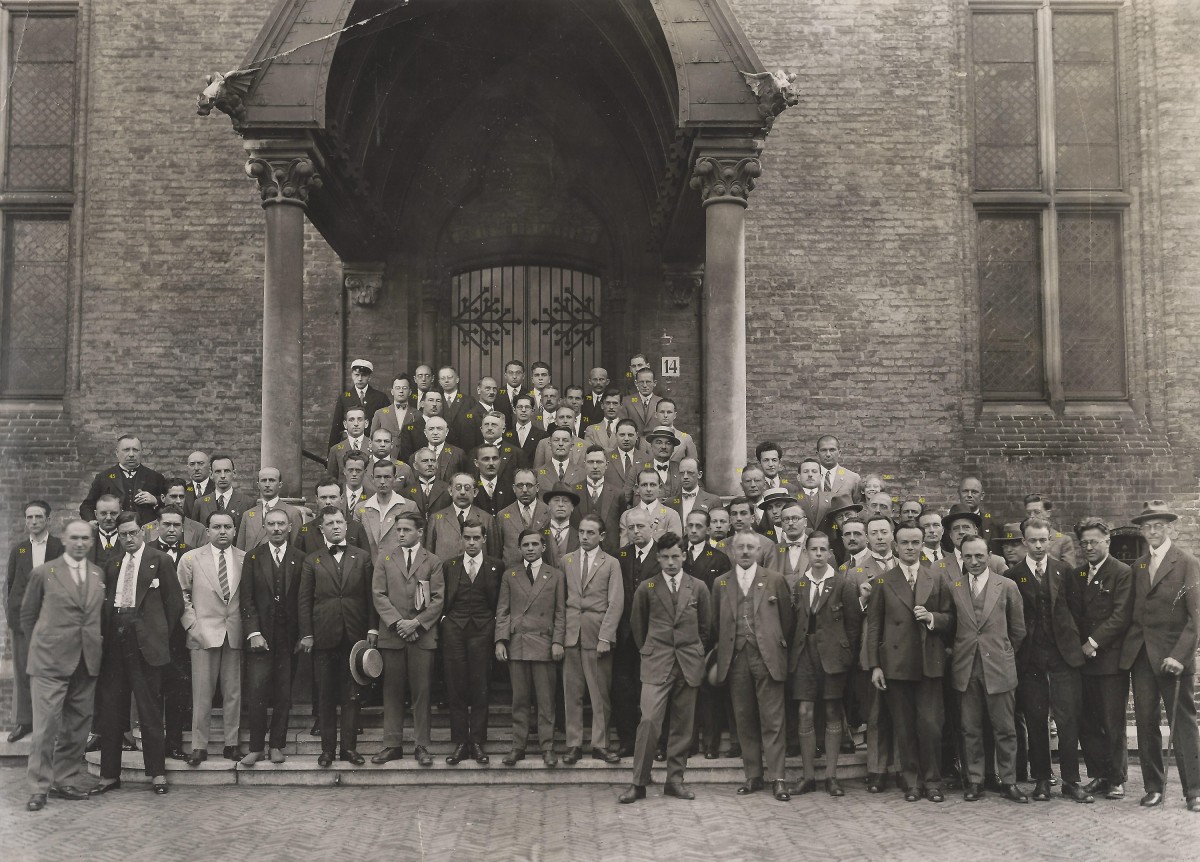
Photo: Participants of the 2nd Olympiad in The Hague 1928 (via https://www.chesshistory.com/winter/extra/thehague.html): 1 Manuel Golmayo de la Torriente; 2 Damián Reca; 3 Roberto Grau; 4 Miklós Bródy; 5 Ion Gudju; 6 Hans Müller; 7 Luis Argentino Palau; 8 Baldur Hönlinger; 9 Vladimirs Petrovs/Vladimir Petrov; 10 Arthur Dunkelblum; 11 Karel Treybal; 13 Robert Crépeaux; 14 Louis Betbeder; 15 Erik Andersen; 16 André Chéron; 18 Marcel Duchamp; 22 Jacques Mieses; 23 Valentín Marín; 24 Luis (Lluís) Cortés; 25 Josef Rejfíř; 27 János Balogh; 28 Stefano Rosselli del Turco; 29 Henri Weenink; 30 André Muffang; 31 Alexander Rueb; 33 José Aguilera or I.E.W. Gemzøe; 34 Carlos Hugo Maderna; 35 Antonio Sacconi; 36 Gösta Stoltz; 37 Siegfried Reginald Wolf; 38 Norman Tweed Whitaker; 45 Willem Schelfhout; 47 Hermanis Matisons/Herman Mattison; 48 Erik Jonsson; 49 Wilhelm Hilse; 50 Max Blümich; 51 I.O. Pedersen; 52 Max Euwe; 53 Ernst Jacobson; 55 Emmanuel Sapira; 57 Paulin Frydman; 59 Dawid Przepiórka; 60 Carl Carls; 61 Holger Norman-Hansen; 62 Karl Ruben; 63 Anatol Tschepurnoff; 64 George[s] Koltanowski; 65 Lajos Steiner; 66 Josef Lokvenc; 67 Oskar Naegeli; 68 Moriz Henneberger; 69 Isaac Kashdan; 70 Erwin Voellmy; 71 Erling Tholfsen; 72 Herman Steiner; 74 Gideon Ståhlberg; 75 Albert Becker; 76 Heinrich Wagner; 77 Mendel Chwojnik; 79 Franz Apscheneek (Fricis Apšenieks); 81 Angel Ribera.
The Polish Team at the 2nd Chess Olympiad
This is a story straight out of a movie: a weakened team travels to their first world championship without their biggest stars. Nobody gives them a chance at a medal. And yet, through courage, youth, and extraordinary resilience, the debutants shake the chess world. This was the story of the Polish team at the 2nd Olympiad in The Hague in 1928 – a tale of a sensational bronze that launched the golden era of Polish chess.
In our book "The 2nd Chess Olympiad – The Hague 1928" we describe this historic tournament in detail. Today we take you on a journey back in time to relive this extraordinary debut.
Weakened, but Not Broken
Before the tournament in The Hague, the International Chess Federation (FIDE) made a controversial decision: only amateurs could participate in the Olympiad. For many teams this was a blow, but for Poland – a true knockout punch. The Polish team had to give up its two superstars, Akiba Rubinstein and Savielly Tartakower, who were classified as professionals.
Without them, Poland traveled to The Hague as a young team and, as we note in our book, "lacking experience." The squad consisted of: Kazimierz Makarczyk, Paulin Frydman, Teodor Regedzinski, Mieczyslaw Chwojnik, and Abram Blass. Their task seemed impossible – to compete with the powerhouses without their leaders.
It Started with a Cold Shower
The tournament did not begin well for the Poles. Already in the 4th round came a painful 1:3 defeat to a weakened but still strong Hungary. A round later, a 1:3 loss to Switzerland made the dream of a medal seem to fade.
But this was precisely when the Polish team showed its character.
The Breakthrough and a Historic Victory over the USA
The turning point was the match against Germany in the 7th round, won convincingly 3:1. This victory gave our players belief and momentum. And in the very next round came one of the most important matches in the history of Polish chess.
Poland faced the USA – favorites for the gold, a team that had been winning match after match in The Hague. As captain Dawid Przepiorka wrote after the match: "Poland deals a crushing blow to the Americans." The 3:1 victory was the sensation of the tournament! Our young chess players had defeated a powerhouse, and hope surged in Polish hearts. Teodor Regedzinski was particularly impressive, confidently defeating Samuel Factor.
Fighting to the Very Last Game
After the victory over the USA, the Poles did not let up. They won 8 of their last 11 matches, drawing only 3. In the final round, in a decisive match against Romania, key victories were secured by Regedzinski and Frydman. Ultimately, thanks to favorable results in other matches, Poland edged ahead of Austria by just half a point and won the bronze medal!
This was an absolutely historic success. A young team, without its biggest stars, stood on the podium in its Olympic debut. The best individual result in the team was achieved by Teodor Regedzinski, who scored 10 points out of 13 possible (77%), becoming one of the heroes of the entire Olympiad.
That bronze medal was the foundation upon which the power of the Polish team was built – a team that in 1930 in Hamburg would go on to win Olympic gold.
Want to explore detailed game analyses, see unique photographs, and follow the Poles' path to the historic medal round by round? You'll find it all in our book "The Great Book of Chess Olympiads – The Hague 1928"!