






The Scandal at the First Chess Olympiad
Why did Poland and the USA not play in London in 1927? A story of finances and rigid rules.
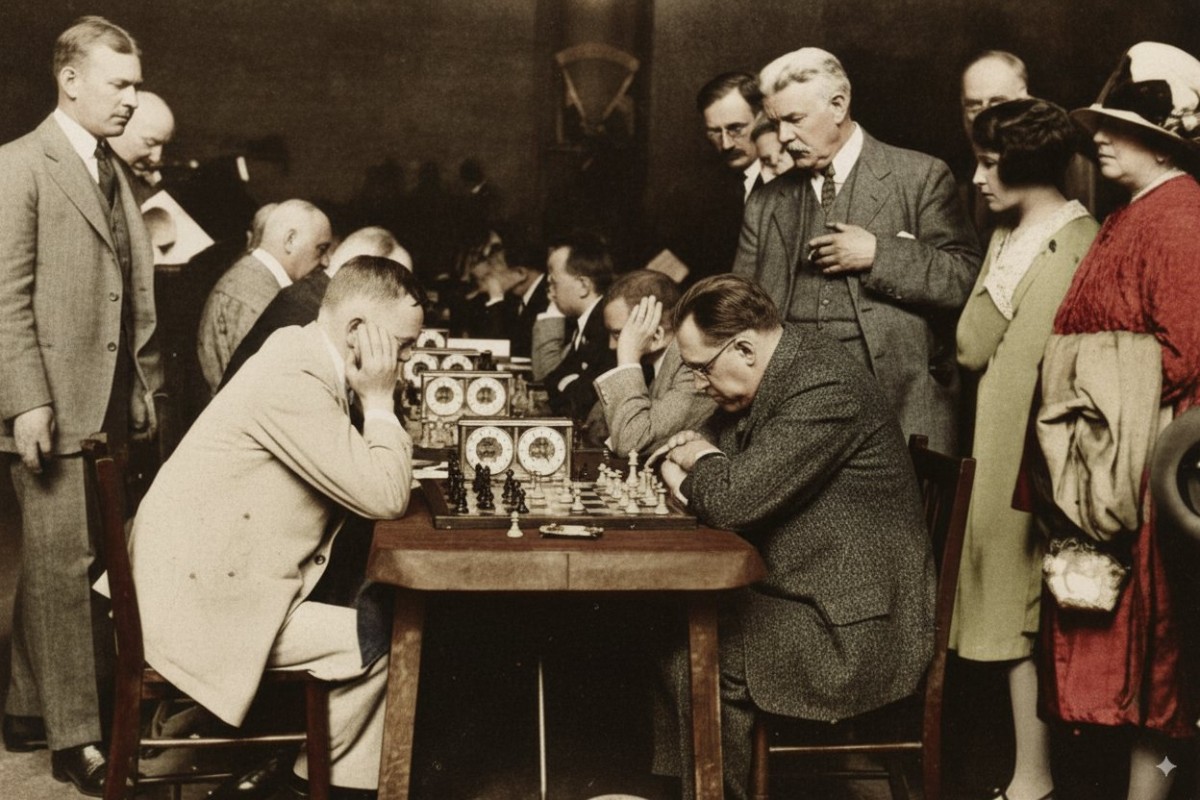
The first official Chess Olympiad in London in 1927 was supposed to be a celebration of the emerging international chess community. It was a historic moment, but two powerhouses were missing – Poland, a rising force in European chess, and the United States. Why? The answer is a mix of bureaucracy, financial problems, and... unforgiving rules.
In our book "The 1st Chess Olympiad – London 1927," we uncover the behind-the-scenes story of this little-known scandal.
The Late Americans
In the case of the US team, the reason was mundane yet painful. The organizers from the British Chess Federation, wanting to ensure a smooth tournament, set a strict deadline for submitting entries. The American federation, struggling with logistics and transatlantic communication – which in the 1920s was far from simple – simply missed the registration deadline.
The rigorous British organizers were unyielding. Even though the presence of the US team, with players such as Frank Marshall, would have significantly raised the prestige of the tournament, rules were rules. The Americans had to sit this one out and wait for the next Olympiad.
Poland’s Financial Troubles
The story behind Poland’s absence is even more dramatic and perfectly illustrates the challenges faced by young nations and their sports federations during the interwar period.
The Polish Chess Federation, though young, had already achieved notable successes and boasted a team with stars such as Akiba Rubinstein, Savielly Tartakower, and Dawid Przepiórka. Poland was tipped to contend for medals. Unfortunately, money stood in the way.
As we read in our book: "In the second case [Poland], financial difficulties also played a major role, as the young Polish Chess Federation had trouble raising the required sum of money in time."
Organizing the trip of an entire team to London – covering travel costs, accommodation, and living expenses – was an enormous financial challenge for a recently reborn nation. Despite their efforts, they failed to secure the necessary funds in time. On top of the financial problems, a late registration ultimately sealed the fate of the Polish team.
A Missed Opportunity
The absence of Poland and the USA was a huge loss for the tournament. The Polish team, as subsequent Olympiads would prove (gold in 1930, silver in 1931 and 1939, bronze in 1935 and 1937), was one of the strongest in the world. Who knows how the first Olympiad might have unfolded had our masters taken their seats at the boards in London.
This story offers a fascinating glimpse into the early days of organized international chess – a time of great enthusiasm, but also mundane problems that could hold back even the greatest masters.
Want to discover more unknown facts and anecdotes from the very first Chess Olympiad? Pick up our book "The 1st Chess Olympiad – London 1927" and travel back to the fascinating world of chess from nearly a hundred years ago!