






A Clash of Generations: 65-Year-Old Tarrasch vs. the Rest of the World
The final great tournament of a legend at the first Chess Olympiad (London 1927)
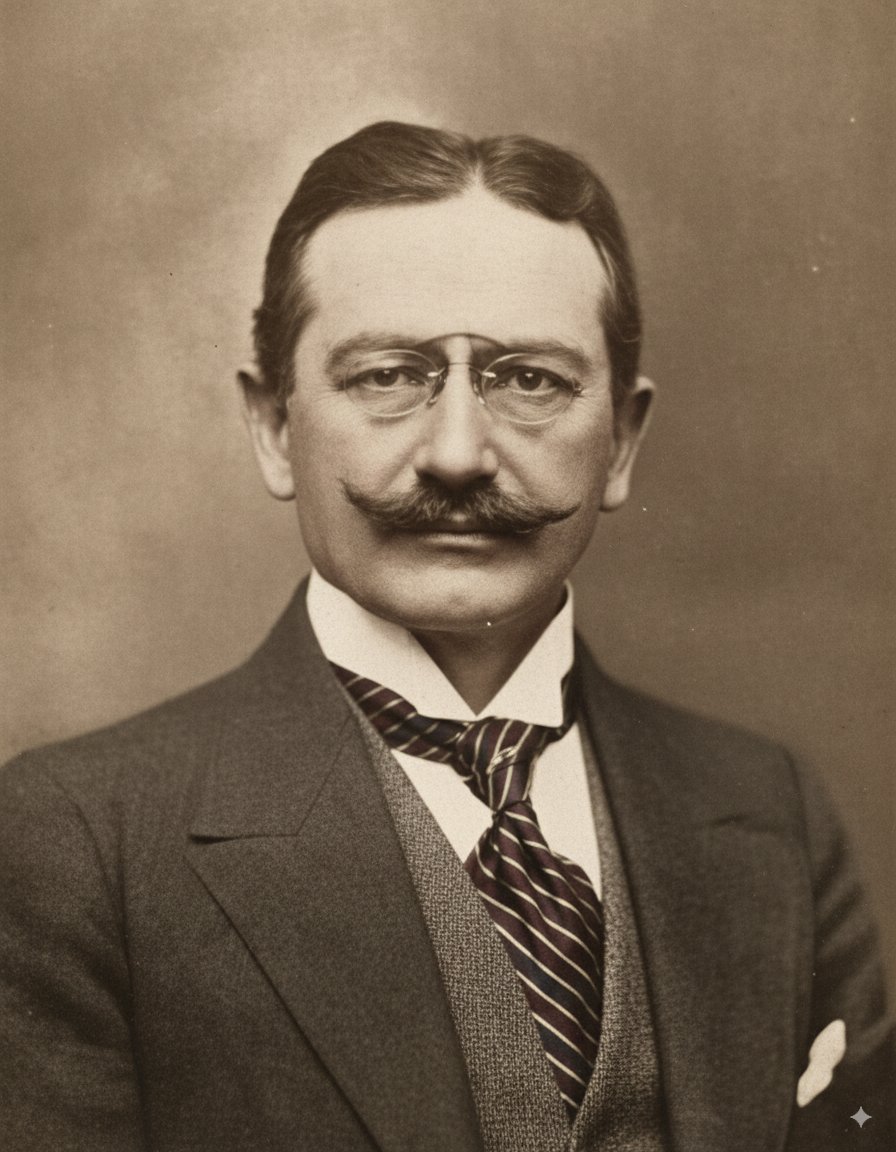
Dr. Siegbert Tarrasch at the First Chess Olympiad
When the first official Chess Olympiad got underway in London in 1927, a giant stood at the helm of the German team. Dr. Siegbert Tarrasch, a 65-year-old veteran and one of the strongest players of the late 19th and early 20th centuries, was playing his final great tournament. It was a symbolic clash of generations – the classical school of chess versus the incoming wave of hypermodernists.
His performance, described in our book "The 1st Chess Olympiad – London 1927," is a fascinating tale of the twilight of an era.
A Legend on First Board
Siegbert Tarrasch was a monumental figure. A teacher, theoretician, and author of the famous saying: "Chess, like love and music, has the power to make people happy." For years, he was one of the leading contenders for the world champion title. In London, at the twilight of his extraordinary career, he was still dangerous to anyone.
Unlike other teams that rotated their lineups, Germany played in the same order throughout. Tarrasch, as the undisputed leader, sat on first board – the most demanding position. His opponents were the top players of other nations.
The Veteran’s Ups and Downs
The tournament was a real rollercoaster for Tarrasch. He started brilliantly, winning in the first round against Italy’s leader, Stefano Rosselli del Turco. In the second round, he defeated Denmark’s Hermann Krause. It seemed the old master was in excellent form.
Dr. Siegbert Tarrasch – his dogmatic approach to strategy was both his strength and his weakness when confronting new ideas.
But then came more difficult times. He drew against the legendary Richard Réti, one of the leaders of the new school. He also suffered painful losses, such as the one against Spain’s Manuel Golmayo de la Torriente.
His final result – 8.5 points from 15 games (+4 =9 -2) – may not seem overwhelming, but considering his age and the strength of the opposition on first board, it was a performance worthy of a master.
The Final Chord
Tarrasch’s performance in London was more than just the sum of his points. It was a symbolic final chord of a great career. In the same playing hall were future champions like Max Euwe and revolutionaries like Richard Réti. Tarrasch, with his classical, dogmatic approach, represented a departing world.
His presence at the first Olympiad was a tribute to the entire era of "classical" chess. He was a living link between the age of Steinitz and Lasker and the new, dynamic world that was just emerging. It was a true clash of generations, played out on 64 squares.
Want to follow all of Siegbert Tarrasch’s games from his final great tournament? Analyses of his encounters and profiles of other legends can be found in the book "The 1st Chess Olympiad – London 1927."