






Checkmate in 5 Moves and Broken Clocks
The greatest dramas and curiosities from the First Chess Olympiad in London
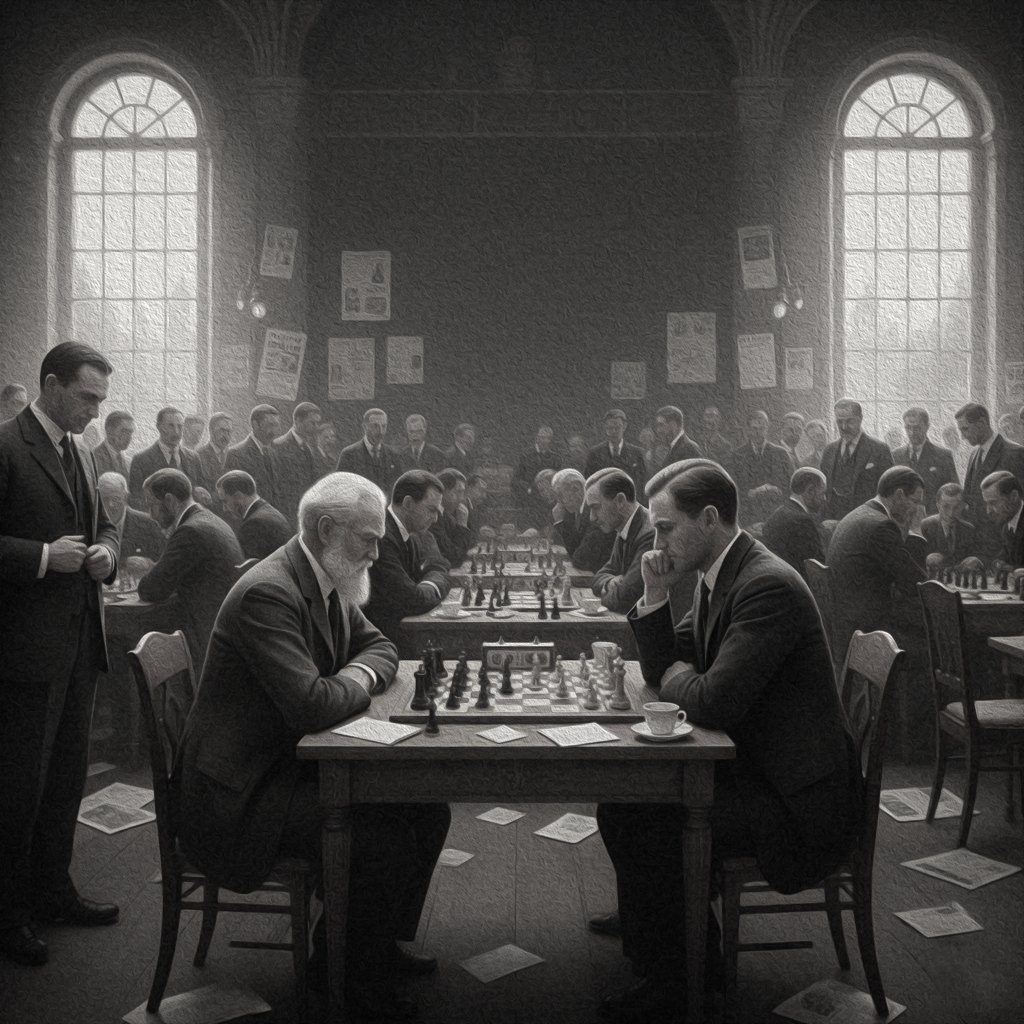
The first official Chess Olympiad in London in 1927 was not only about historic games and the birth of a great tradition. It was also a collection of incredible, often comical anecdotes that show the human side of the royal game. From a game that ended after just five moves due to a disastrous blunder, to clocks that refused to work – there was truly never a dull moment!
Here are some of the most fascinating behind-the-scenes stories that we uncover in our book "The 1st Chess Olympiad – London 1927."
1. The Shortest Game in History? The King Goes on an Adventure
In round 9, one of the most bizarre games in Olympiad history took place. Argentina’s Luis Palau was playing against Yugoslavia’s Sadi Kalabar. Kalabar arrived late for the round and was more focused on filling out his scoresheet than on the game itself.
The game proceeded as follows:
1. d4 Nf6 2. c4 e6 3. Nf3 Bb4 4. Bd2

At this point, Kalabar, intending to play the standard 4...Qe7, absent-mindedly grabbed his King and was forced to make the tragic but obligatory move, already written on his scoresheet: 4...Ke7??

The surprised Palau continued with 5. Bxb4.

Kalabar, still unaware of his blunder, tried to move his Queen... but the King was in the way! Bewildered, he looked at the board and, hearing laughter all around and seeing what had happened, immediately resigned. The game lasted only 5 moves and became legendary as a prime example of Olympiad absurdity.
2. War Against Time... and a Broken Clock
In the third round, during the prestigious match between Czechoslovakia and Germany, a true war of nerves broke out – but not only between the players. The main adversary turned out to be... the chess clocks.
In the crucial game on first board between Richard Réti and Siegbert Tarrasch, observers noticed that Tarrasch’s clock was barely moving at all. After the arbiters intervened and replaced the clock, the problem appeared again – this time, Réti’s time was not ticking!
To avoid further confusion and chaos, in an equal position both masters agreed to a draw. This illustrates how mundane technical problems could affect results in the pioneering days of FIDE.
3. The Tardy Master and the Procedural Trap
Dramatic events also took place away from the board. In the England vs. Yugoslavia match, the game between the hosts’ leader, Henry Atkins, and Borislav Kostić was adjourned. Atkins, convinced he had a winning position, made a procedural error by recording his sealed move as move 39, thinking it was the regulation 40th move.
But that was not the end of his troubles. Atkins was late for the resumption!
Kostić, seeing his opponent’s absence, immediately started his clock. When the Englishman finally arrived at the table, it turned out he had exceeded his time limit. The situation was unprecedented. A special arbitration tribunal was convened, which ultimately... ordered the game to be replayed! It ended in a draw, but the whole affair shows the great emotions and controversies that accompanied even the very first Olympiad.
These and other fascinating stories can be found in our book "The 1st Chess Olympiad – London 1927." It is not just a sports chronicle, but a colorful tale of people, their passions, and the mistakes that shaped the history of chess.