






A Resigned Game, a Winning Variation
London 1927 – the extraordinary story of the Réti vs. Johner game, or how to lose while holding a draw and perhaps... even a victory in your pocket?
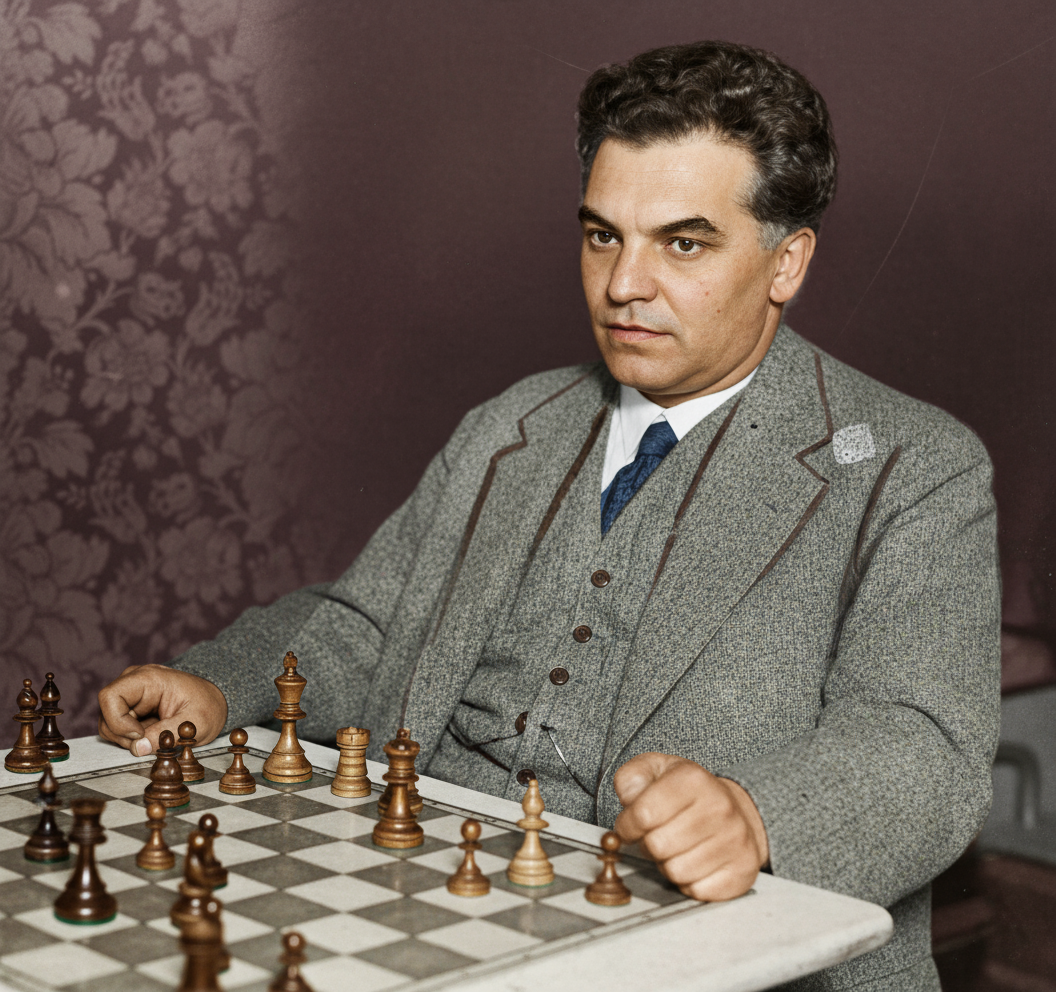
Richard Réti
A Curiosity from the 1927 London Chess Olympiad
The history of chess is full of dramatic blunders and missed opportunities. But the story that unfolded during the first Chess Olympiad in London in 1927 defies belief. It is a tale of how one can resign a game in a drawn position, only to discover moments later that... there was a winning variation all along!
This absurd but true anecdote, described in our book "The 1st Chess Olympiad – London 1927," shows just how large a role nerves and misjudgment play in chess.
The Top-Board Clash: Czechoslovakia vs. Switzerland
Round four of the Olympiad. On first board, two legends meet: Richard Réti, the genius of hypermodernism, and Hans Johner, Switzerland’s leading master.

Hans Johner
The game is fiercely contested and, after many twists and turns, reaches a complicated pawn endgame. The position on the board is blocked. Réti, playing White, has a strong passed pawn, but his King cannot support it. Johner has a solid pawn structure, and the game appears to be heading toward an inevitable draw.
Here is the position that went down in history:

White (Réti): Black (Johner)
The Decision That Shook the Hall
As Réti himself admitted after the game, seeing the blocked position, he was about to offer a draw. But before he could do so, something unexpected happened.
Hans Johner... resigned!
The shock in the hall was immense. Réti, no less surprised than the spectators, accepted the victory. After the game, when emotions had settled somewhat, the Swiss master was asked why he had resigned in a drawn position.
A Tragic Miscalculation
Johner, convinced he was lost, showed a variation that he believed led to inevitable defeat: 1...Kf8 2.h4 gxh4 3.Kh4 Kg8 4.Kg5 Kg7 5.e7 Kf7 6.e8Q+ Kxe8 7.Kxg6

In his assessment, after this move the White King reaches the h-pawn and wins. And then one of the spectators noticed something Johner had overlooked.
His variation was... flawed! But not in the way he thought. After 7.Kg6, Black does not lose. Black WINS!
All it took was the brilliant 7...b5!!.

This quiet pawn move on the opposite wing creates a decisive passed pawn that White cannot stop.
Hans Johner resigned a game in which he was not only not losing, but actually had a winning variation up his sleeve. It is one of the most bizarre episodes in Chess Olympiad history – a story of how pressure and faulty calculation can lead to a true chess harakiri.