






3rd Chess Olympiad – Hamburg 1930
Relive the greatest triumph in the history of Polish chess – the Olympic gold medal! Travel back to Hamburg in 1930 and witness Poland's finest hour in chess – the gold medal at the Chess Olympiad. This exceptional monograph is the most detailed account of this historic tournament in the world, based on unique archival sources from the era. Discover a record number of games with original commentary, all 17 unbeaten games of Akiba Rubinstein, and a wealth of photographs that bring history to life. An absolute must for every fan of chess and Polish sport.
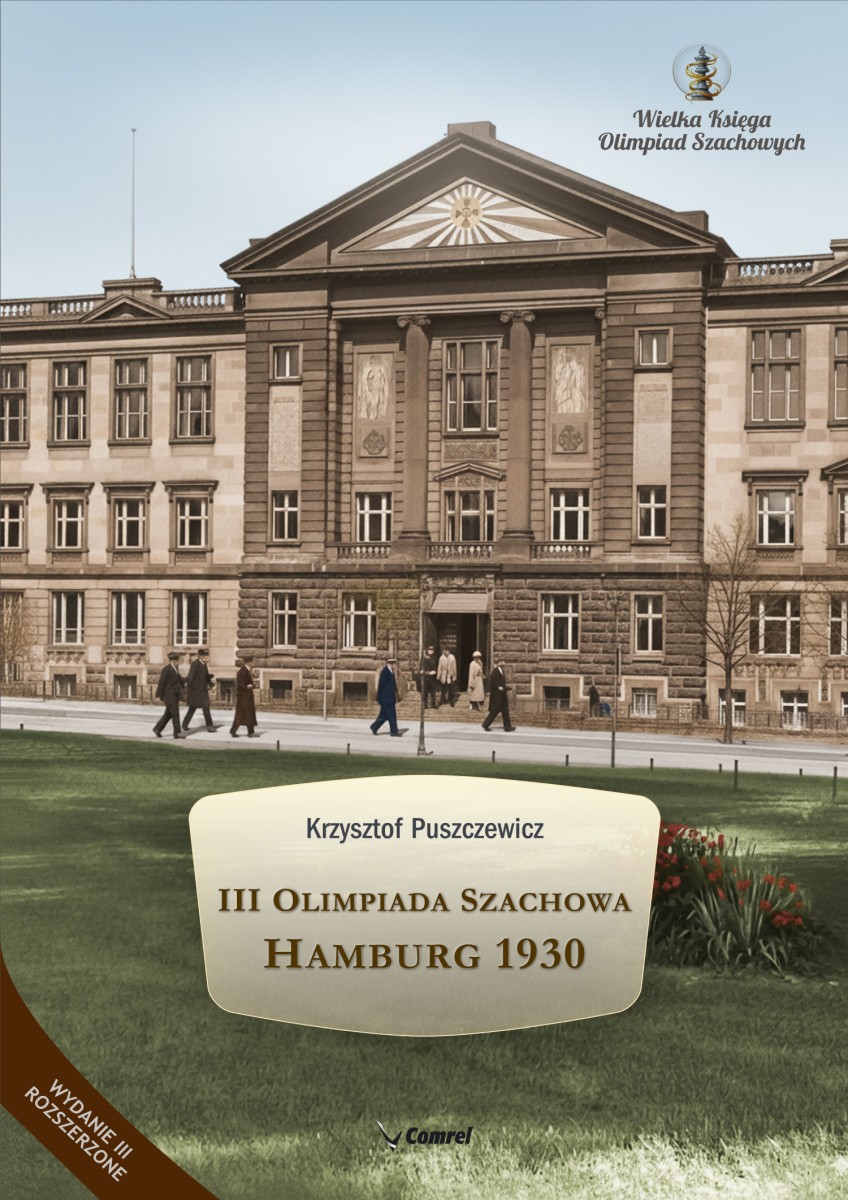
How Poland Won the Chess World Championship in 1930: The Story of Olympic Gold from Hamburg
Did you know that in the shadow of the Great Depression, while the world watched the first FIFA World Cup with bated breath, Polish chess players were writing one of the most glorious chapters in the history of our sport? In 1930, in Hamburg, a team of brilliant strategists achieved the impossible – winning the gold medals at the 3rd Chess Olympiad, outclassing powerhouses from around the globe. How did they do it?

From left: Frydman, Tartakower, Rotmil, Rubinstein, Makarczyk, Przepiórka, and Wróbel
Hamburg 1930: Why Was This Tournament So Special?
The Olympiad in Hamburg was no ordinary competition. It took place during an extremely turbulent period – the world was grappling with the effects of the Great Depression, while groundbreaking discoveries were being made in science and technology, such as the discovery of the planet Pluto.
For the first time in FIDE history, the barrier between amateurs and professionals was abolished, which meant a true constellation of stars took to the stage:
- World Champion Alexander Alekhine
- The legendary Akiba Rubinstein
- Nice tournament winner Savielly Tartakower
- American champion Frank Marshall
- The exotic genius from India representing England, Sultan Khan
In such distinguished company, the Polish team was no underdog. Quite the opposite.
"Bombenmannschaft" – Where Did the Polish Team’s Nickname Come From?
Even before the tournament began, German journalists dubbed the Polish team "Bombenmannschaft" (the bombshell team), considering them the clear favorites. It’s hardly surprising, given a lineup that commanded respect worldwide:
- Akiba Rubinstein: Regarded as one of the strongest players in the world, a contender for the world championship crown.
- Savielly Tartakower: A grandmaster of immense reputation.
- Dawid Przepiórka: Vice-champion of the World Amateur Championship in The Hague in 1928.
- Kazimierz Makarczyk: A solid and tenacious player.
- Paulin Frydman: A young talent rounding out the squad.

Akiba Rubinstein – Hamburg 1930 / Photo: kwabc.org
The Road to Gold: The Key Match and a Nail-Biting Finish
Poland proved their strength from the very first round, crushing the defending champions, the mighty Hungarian team, 3.5:0.5. This victory set the tone for the entire tournament and showed that the "Bombenmannschaft" had come for gold.
Poland’s star was Akiba Rubinstein, who delivered a phenomenal performance. In 17 games, he did not suffer a single defeat, scoring 15 points (+13 =4 -0) – the best individual result of the entire Olympiad. His encounters with the world’s top chess players, such as his game against Géza Maróczy, went down in chess history.
The battle for first place with Hungary, however, lasted until the final round. Poland’s ultimate triumph hung in the balance until the very end, and the decisive factor turned out to be a draw in the game between Kazimierz Makarczyk and Finland’s Eero Rasmussen. The score of this encounter was considered lost for decades. Only recently did the author of the "Great Book of Chess Olympiads" series manage to find it in archival materials, allowing us today to trace how Poland secured the priceless "golden" half point.
Want to Discover the Inside Story of Poland’s Greatest Chess Triumph?
This story is much more than just results and game scores. It is a tale of strategy, genius, and nerves of steel in one of the most challenging eras of the 20th century.
If you want to find out:
- Exactly what the game that clinched gold for Poland looked like?
- Why Akiba Rubinstein was unbeatable?
- What unique strategies the greatest masters of those years employed?
...pick up the e-book "3rd Chess Olympiad – Hamburg 1930." It is the most complete account of this tournament in the world, containing a record number of games (including all 15 games of grandmaster Erich Eliskases, while popular databases have only four!) as well as original commentary by the masters of the era.