






2nd Women's Chess Olympiad – Split 1963 – Complete Description
The 2nd Women's Chess Olympiad, held in Split in 1963, went down in history as one of the most thrilling chess events of the 1960s. After a six-year break since the first Olympiad in Emmen, the world of women's chess came together once again to determine the strongest national team.
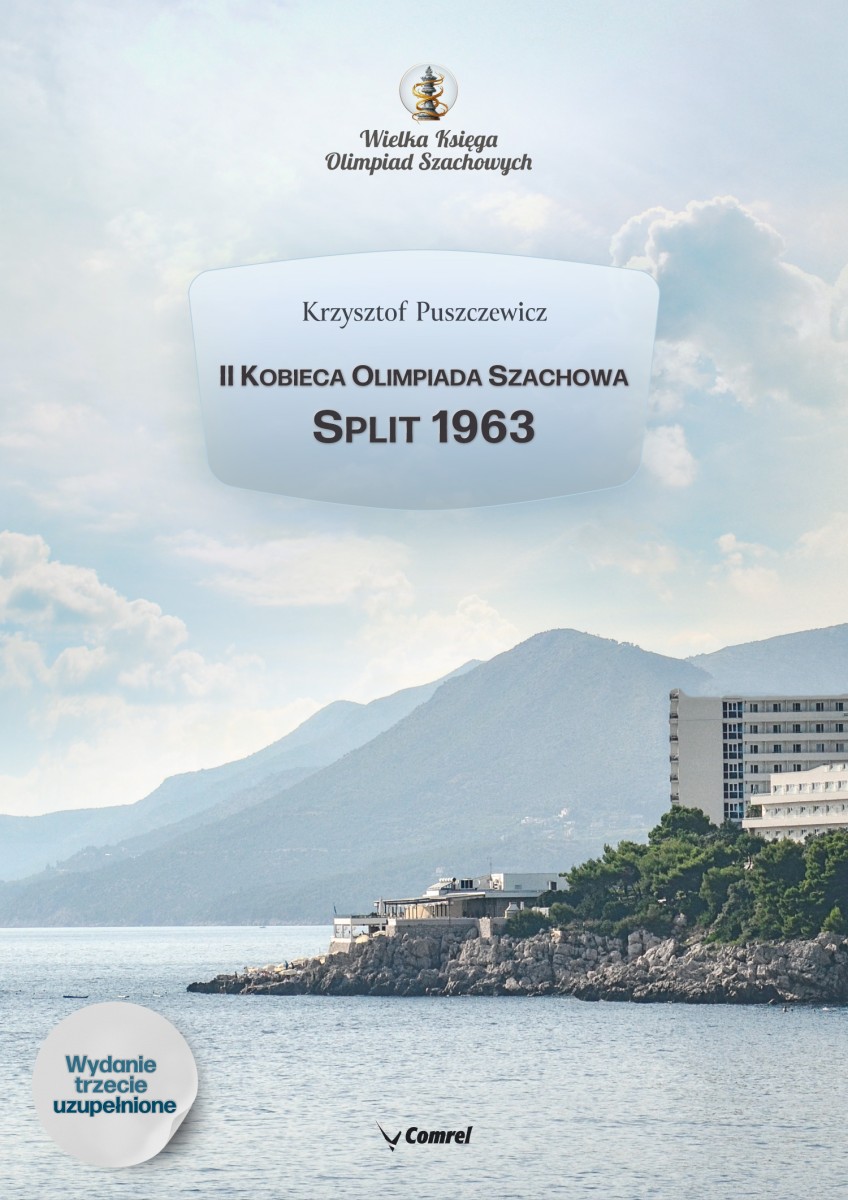
2nd Women's Chess Olympiad – Split 1963
- Basic tournament information
- Favorites and team rosters
- Olympiad progress: round by round
- Best games of the Olympiad
- Final results and standings
- Poland at the Olympiad – performance analysis
- Facts and records of the Olympiad
- Tournament organization
- Tournament atmosphere
- Historical significance
- Summary
Basic tournament information
- Dates: September 21 – October 10, 1963
- Venue: Split, Yugoslavia (present-day Croatia)
- Number of teams: 15
- Number of participants: 41 players
- Format: Round-robin system (all-play-all)
Favorites and team rosters
USSR – The Gold Medal Squad
The Soviet team arrived with an impressive lineup:
- Nona Gaprindashvili – 22-year-old women's world champion
- Tatiana Zatulovskaya – experienced grandmaster
- Kira Zvorykina – veteran of international tournaments
Yugoslavia – Ambitious Hosts
The Yugoslav team was among the main favorites:
- Milunka Lazarević – seven-time champion of Yugoslavia
- Verica Nedeljković – participant in Women's World Championship finals
- Katarina Jovanović – rising star of Yugoslav chess
Poland – A Strong Roster with High Hopes
The Polish team arrived with a very strong lineup:
- Henryka Konarkowska – newly crowned Polish champion
- Krystyna Radzikowska (née Hołuj) – national vice-champion
- Mirosława Litmanowicz – bronze medalist of the Polish championship
Other Teams
The tournament also featured national teams from:
- Romania with rising star Alexandra Nicolau (23 years old)
- East Germany with Edith Keller-Herrmann
- Hungary with Eva Karakas
- Netherlands, USA, Mongolia, Bulgaria, Austria, West Germany, Belgium, Scotland, and Monaco
Olympiad progress: round by round
Opening Rounds – First Surprises
Round I produced results largely in line with expectations. Poland defeated Belgium 2:0, the USSR beat Hungary, and Yugoslavia edged East Germany 1.5:0.5.
The Sensation of the Olympiad – Mongolia vs USA
Round IV was written into the annals of chess history. Mongolia crushed the US team 2:0! The experienced Gisela Gresser lost to Khulgana, dropping a piece as early as move 16. It was one of the biggest upsets of the entire tournament.
The Medal Battle – USSR vs Yugoslavia
Round XIV was the climactic moment of the Olympiad. The USSR – Yugoslavia match drew crowds of spectators. The encounter ended in a 1:1 draw, allowing the Soviet women to maintain their lead in the standings.
The most important games of this match:
- Gaprindashvili – Lazarević: a draw after a mistake by the Yugoslav player
- Nedeljković – Zatulovskaya: a spectacular victory for the Yugoslav player
Best games of the Olympiad
Best Game Prize: Gaprindashvili – Gresser
Nona Gaprindashvili received a special prize for her game against Gisela Gresser (USA). The women's world champion executed a masterful combination in the Robatsch Defense, culminating in a spectacular tactical attack.
The key moment came on move 27:
27...Ne4! 28.fxe4 Ng3!
This combination forced the American player to resign.
Best Endgame Prize: Lazarević – Vreeken
Milunka Lazarević received a prize for a brilliantly played endgame against the Dutch chess player Corry Vreeken. The game lasted a full 5 hours, and Lazarević demonstrated remarkable technique in converting a minimal advantage.
The Nedeljković Phenomenon – 12 Wins from 12 Games
Verica Nedeljković achieved an extraordinary result – a perfect 100% score! The Yugoslav player won all 12 of her games, a rarity in international tournaments of this caliber.
Her most notable achievements:
- Defeated every opponent without a single draw
- In the decisive tiebreak against Zatulovskaya, she executed a brilliant pawn sacrifice
- Demonstrated excellent endgame technique
Final results and standings
Olympiad Podium
1. USSR – 25.0 points 🥇
- Gaprindashvili: 11.5/12 (96%)
- Zatulovskaya: 8/10 (80%)
- Zvorykina: 5.5/6 (92%)
2. Yugoslavia – 24.5 points 🥈
- Nedeljković: 12/12 (100%)
- Lazarević: 9.5/12 (79%)
- Jovanović: 3/4 (75%)
3. East Germany – 21.0 points 🥉
- Keller-Herrmann: 11.5/14 (82%)
- Nowarra: 7/10 (70%)
- Kraatz: 1/3 + 3 draws
Full Final Standings
- Romania – 18.5 pts
- Bulgaria – 17.5 pts
- Hungary – 17.0 pts
- Netherlands – 15.5 pts
- Poland – 15.0 pts
- USA – 12.5 pts
- Mongolia – 10.5 pts
- West Germany – 10.5 pts
- Austria – 8.0 pts
- Belgium – 5.0 pts
- Monaco – 5.0 pts
- Scotland – 4.5 pts
Poland at the Olympiad – performance analysis
A Disappointing Result for the Polish Team
The Polish team finished in 8th place, which was below expectations. Before the tournament, Poland was tipped as a medal contender.
Reasons for the weaker result:
- Krystyna Radzikowska's nervous play
- Henryka Konarkowska's poor form after her loss to Lazarević
- Lack of dedicated coaching support (unlike other teams)
Positive note:
- Mirosława Litmanowicz played solidly and did not lose a single game against rival teams
- Poland defeated: Belgium (2×), Austria, Scotland, Monaco, and Mongolia
Key Matches for Poland
- Poland – USA (1:1): A hard-fought draw
- Poland – USSR (0:2): The team's first defeat
- Poland – Yugoslavia (0:2): A dramatic outcome in both games
- Poland – Netherlands (1:1): A missed opportunity for victory
Facts and records of the Olympiad
Individual Statistics
Best results by board:
Board 1:
- Gaprindashvili (USSR) – 96%
- Nicolau (Romania) – 83%
- Keller-Herrmann (East Germany) – 82%
Board 2:
- Nedeljković (Yugoslavia) – 100%
- Zatulovskaya (USSR) – 80%
- Nowarra (East Germany) – 70%
Reserve board:
- Zvorykina (USSR) – 92%
- Jovanović (Yugoslavia) – 75%
- Timmer (Netherlands) – 72%
Undefeated Players
Seven players completed the Olympiad without a single loss:
- Keller-Herrmann (14 games)
- Gaprindashvili (12 games)
- Nedeljković (12 games)
- Nicolau (12 games)
- Zvorykina (6 games)
- Jovanović (4 games)
- Kraatz (4 games)
Tournament organization
Hotel Marjan – The Tournament Hub
All players were accommodated at the luxurious "Marjan" hotel situated on the shores of the Adriatic Sea. The hotel featured a spacious playing hall where all games were held.
Time Control and Regulations
- Time control: 2.5 hours for 45 moves + 1 hour for every subsequent 16 moves
- Tournament system: Single round-robin (all-play-all), even though FIDE regulations called for division into groups when more than 14 teams participated.
Arbiters
- Chief Arbiter: Olga Rubtsova (former women's world champion)
- Round Arbiter: Broslav Rabar
- Tournament Director: Stanko Hrasoveč
Tournament atmosphere
International Championship in Split
The Olympiad in Split was not just a sporting competition, but also a grand celebration of chess. The organizers provided:
- A welcome reception on the hotel terraces
- Boat excursions on the Adriatic Sea
- Excellent medical and coaching support
- Souvenirs for all participants
Behind the Scenes
Travel adventures: The Polish team experienced an engine failure during their flight to Belgrade, which made the journey to Split considerably longer than planned.
Match atmosphere: The USSR – Yugoslavia match drew crowds of spectators a full hour before the start of play.
Historical significance
Development of Women's Chess
The 2nd Women's Chess Olympiad contributed to:
- Popularizing women's chess on the international stage
- Raising the standard of play among female players
- Developing international chess cooperation
Impact on Future Olympiads
The organizational success of the Split Olympiad became a model for future tournaments. The competition format and organizational standards established in 1963 were emulated in subsequent editions.
Summary
The 2nd Women's Chess Olympiad in Split 1963 was written in golden letters in the history of chess. The USSR's triumph, the Nedeljković phenomenon with a perfect 100% score, Mongolia's sensational victory over the USA, and the thrilling battle for medals down to the final round – all of this makes for a fascinating story of this historic tournament.
For Polish chess players, the Olympiad was a lesson in humility, but it also demonstrated that with proper preparation and coaching support, Polish women could compete with the best in the world.
Detailed descriptions of all games, complete analyses, photographs of participants, and full results can be found in the book "2nd Women's Chess Olympiad – Split 1963" by Krzysztof Puszczewicz, available at olympchess.com.